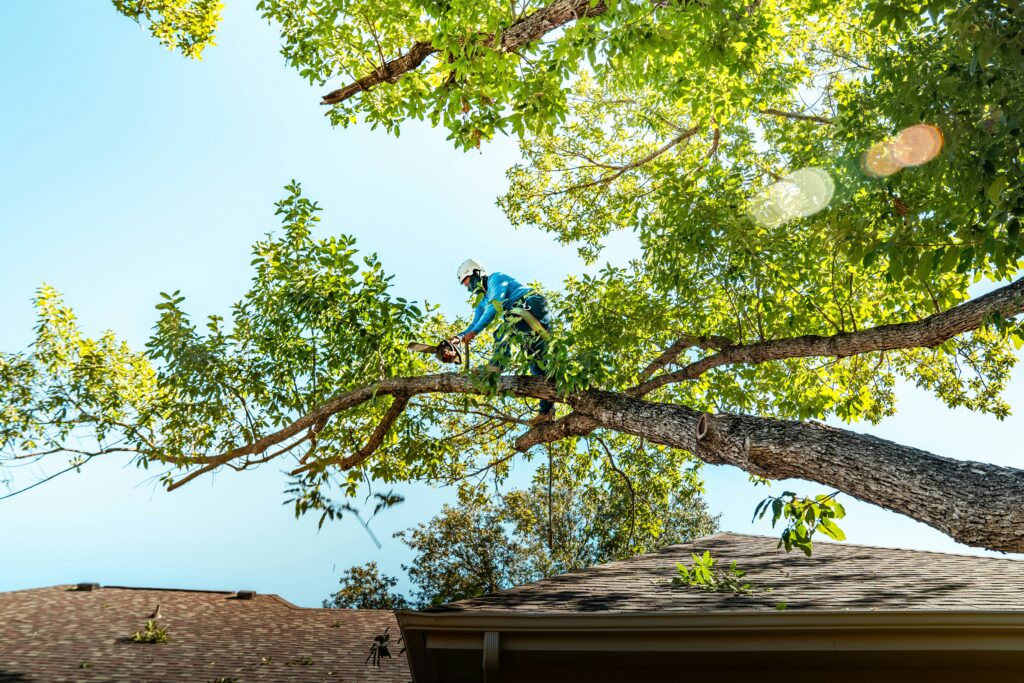
Tree trimming in Lincoln, NE is essential for keeping your trees healthy, safe, and attractive. Regular pruning prevents storm damage, removes hazardous limbs, and improves the appearance of residential and commercial properties throughout Lincoln and Lancaster County. Great Plains Tree Service provides expert trimming with full cleanup on every job. Call (402) 316-2271 for a free estimate.
Why Tree Trimming Matters in Lincoln’s Climate
Lincoln trees face strong winds, heavy snow, ice storms, and seasonal weather swings that weaken branches over time. Regular trimming is the single most effective protection against the limb failures these conditions cause. Removing deadwood eliminates the branches most likely to drop in a storm; thinning the canopy reduces wind resistance and ice loading; and clean, properly placed cuts heal quickly, keeping disease out of healthy wood. Trees that are trimmed every few years survive Lincoln’s storm seasons. Neglected trees become emergency calls.
When to Trim Oaks in Lincoln — Timing Matters
If you have oak trees, timing isn’t optional. Oak wilt is a serious fungal disease that spreads when beetles are drawn to fresh pruning wounds during the growing season. To protect your oaks, schedule major oak pruning between November and March, when the disease vector is inactive and the tree is dormant. A broken or hazardous oak limb can be removed any time of year — a genuine hazard always outweighs the timing rule — but for routine oak work, the dormant-season window is the professional standard, and it’s what we recommend to every Lincoln oak owner.
When Do You Need Tree Trimming in Lincoln?
You may need professional trimming if you notice overgrown branches touching your roof, limbs hanging over driveways or sidewalks, dead or diseased branches, trees blocking sunlight to your lawn, or branches interfering with power lines. Routine trimming improves tree health and reduces long-term risk to your property.
Trees Near Power Lines in Lincoln
Branches contacting or growing toward power lines are never a DIY job. Lincoln Electric System (LES) manages clearance around its primary distribution lines, while branches threatening the service line running to your individual home are generally the homeowner’s responsibility. If you’re unsure which applies, call us and we’ll assess it safely — and never attempt to trim near an energized line yourself.
Our Tree Trimming Process
We start with a tree evaluation, assessing the health and structure of each tree. Then strategic pruning, carefully removing dead, damaged, or overgrown limbs. Next, structural shaping to maintain proper balance and growth patterns. Finally, complete cleanup, clearing all branches and debris from your yard. We never top trees — topping creates weak, fast-growing sprouts and turns a healthy tree into a long-term hazard. Any company offering to top your tree is telling you they don’t understand trees.
Tree Trimming for Common Species in Lincoln
Lincoln’s diverse canopy includes many species that each need a different pruning approach.
Cottonwood trees grow fast and produce large, heavy limbs that become hazardous in wind. Regular trimming prevents branch failures, especially before Nebraska’s spring storm season.
Siberian Elm grows aggressively and needs frequent trimming; untrimmed elm branches quickly encroach on rooflines, power lines, and neighboring properties.
Silver Maple is prone to splitting due to weak branch structure. Structural pruning when the tree is young prevents costly removal later.
Honeylocust responds well to pruning and benefits from regular shaping to maintain clearance over sidewalks, driveways, and parked vehicles.
Oak requires the careful November-to-March timing described above to avoid spreading oak wilt.
If you’re not sure what species you have or the best approach, our crew is happy to evaluate your trees and give honest recommendations.
Seasonal Tree Trimming in Lincoln
Lincoln’s climate brings strong winds, heavy snowfall, and seasonal storms that stress tree limbs. Preventative trimming before storm season significantly reduces the risk of broken branches and property damage. Late winter and early spring are ideal for structural pruning, while light maintenance trimming can be done throughout the year. Scheduling regular trimming helps Lincoln property owners avoid costly emergency situations.
The Importance of Professional Pruning Technique
Improper trimming weakens a tree and causes long-term health problems. Topping or excessive cutting leads to unstable growth and increased disease vulnerability. Our crew follows proper arboriculture practices so every cut promotes healthy regrowth, maintaining the tree’s natural structure while removing only what’s necessary for safety and appearance. Professional trimming in Lincoln requires both experience and the right equipment to safely manage branches near structures, driveways, and utility lines.
Neighborhoods We Serve for Tree Trimming in Lincoln
We provide trimming throughout Lincoln and Lancaster County, regularly serving South Lincoln including Yankee Hill, Wilderness Hills, and Fallbrook; East Lincoln including Havelock, Belmont, and College View; North Lincoln including Airpark, Highlands, and the Arbor Road area; West Lincoln including Firethorn, Williamsburg, and the Coddington Avenue corridor; Downtown and Near South; and surrounding communities including Waverly, Hickman, Roca, Malcolm, and Seward. See our full service areas.
Tree Trimming Cost in Lincoln
Trimming cost depends on the tree’s size, accessibility, and the number of branches being removed. Small trees require less labor; large mature trees may need advanced equipment and safety planning. We offer free written estimates so you can understand your options before scheduling. For properties with several trees, we can prioritize the work across seasons to fit your budget. If a tree is beyond saving, we also provide tree removal, and our stump grinding can clear your property afterward.
Frequently Asked Questions About Tree Trimming in Lincoln
How often should trees be trimmed?
Most trees benefit from trimming every 1–3 years depending on species and growth rate. Fast growers like silver maple and elm may need more frequent attention.
What’s the best time of year for trimming in Lincoln?
Late fall through early spring is ideal for most species, and essential for oaks. Hazardous limbs can be safely removed year-round.
Is trimming covered by homeowners insurance?
Insurance typically doesn’t cover routine maintenance but may cover storm-related damage.
Do you trim large commercial properties?
Yes — we serve residential and commercial properties, HOAs, and rental properties throughout Lincoln.
Schedule Tree Trimming in Lincoln Today
If your trees need professional trimming, contact Great Plains Tree Service at (402) 316-2271 for reliable service and a free estimate. For additional guidance on tree care and pruning regulations, you can visit the City of Lincoln Community Forestry page.